How Sigfox Is Built
TL;DR ✨
There is no need to wax lyrical about Sigfox. More than enough has already been written about it—and it must be said that much more had been written than had actually happened by then. Construction of Sigfox began sometime around December 2016. To this day, the network is still heard about only in the newspapers, but not much among corporate clients.
Comparing České radiokomunikace's LoRa project with Sigfox reveals two things they have in common.
From the archive
This article was first published on 2017-08-13. It is also a snapshot of its time, so some details and recommendations may no longer reflect the current situation.
The article documents a practical Sigfox network deployment in 2017.
There is no need to wax lyrical about Sigfox. More than enough has already been written about it—and it must be said that much more had been written than had actually happened by then. Construction of Sigfox began sometime around December 2016. To this day, the network is still heard about only in the newspapers, but not much among corporate clients.
Comparing České radiokomunikace's LoRa project with Sigfox reveals two things they have in common.
- Almost overnight, glowing articles about a revolution in IoT began to appear. Suddenly there were great forecasts from Cisco, HP, and others announcing that a billion IoT devices would be connected by 20XY.
- Both LoRa and Sigfox lack real applications. There is nothing visible or audible about any application of these technologies in the Czech Republic. Everything remains at the project-documentation stage. Whatever can be created from them had long since been deployed elsewhere. For now, people are simply talking about it, and most projects are at the stage of: "There is an idea; now all that remains is to find a way to finance it." Both ČRa and SimpleCell base their philosophy on the rule: "Build the network now, then find out what can be done with it."
On reflection, it makes sense that none of the major operators embarked on building an IoT network at their own expense. ČRa is known to be funding LoRa itself, while Sigfox in the Czech Republic is being funded by SimpleCell a.s.
Now for a look inside Sigfox. What is the sexiest thing about this technology? It is simply elegant and straightforward. Its construction requires nothing complicated.
The entire infrastructure consists of the following elements:
A) A Sigfox rack containing all the smart components (power, routing, and backup connectivity)
🪟 B) Running coaxial cables from the server room to the LNA unit at the top
C) The LNA unit sits between the Sigfox omnidirectional antenna and the cabling. An LNA is simply a signal amplifier. It takes a weak signal and amplifies it.
D) At the very top is a simple omnidirectional antenna.
🪟 📝 A) The Sigfox server in the rack
A metal box is installed in the server room. The box contains the following modules:
- Power supply—a transformer (to provide power)
- Mikrotik Rb921-2HPnD (routing, VPN, and other services)
- Huawei USB dongle (backup connectivity)
- Sigfox module (signal converter)
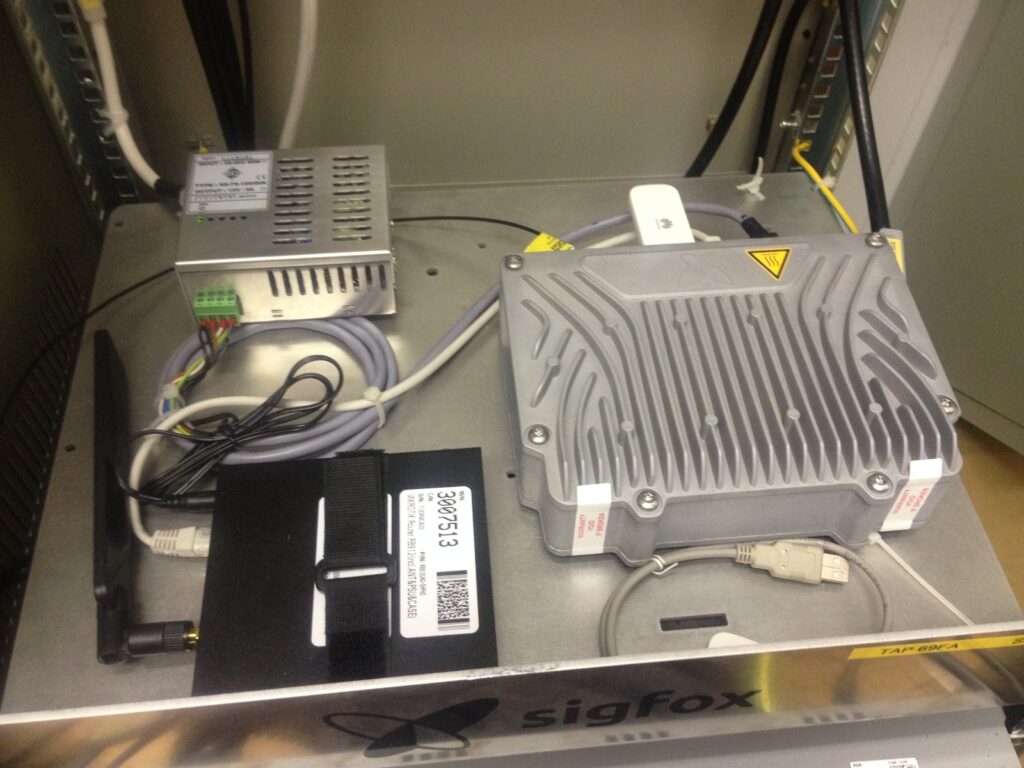 Sigfox internal modules
🪟 📝 2. Running the cabling from the server room to the LNA unit
A waveguide or RG8 (coaxial cable) is simply run from the server to the LNA, positioned as high on the mast as possible.
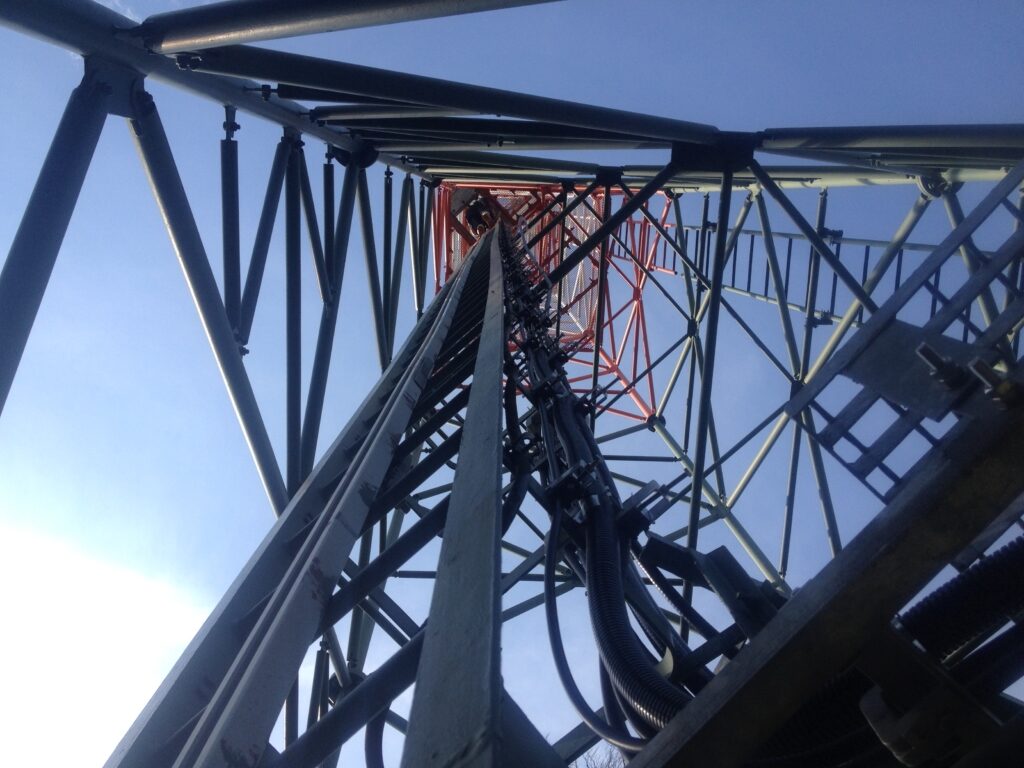 Running cabling from the server room up to the LNA unit on the mast
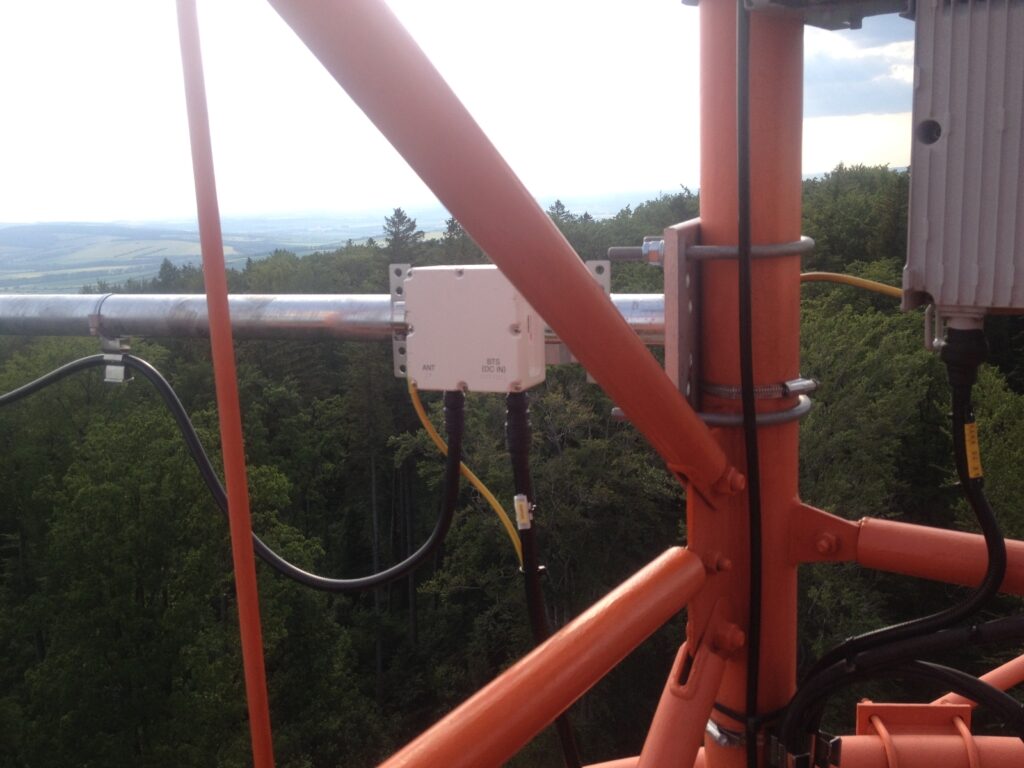 At the top of the mast—the LNA unit in front of the omnidirectional antenna. The omnidirectional antenna is on the left of the photo (outside the frame)
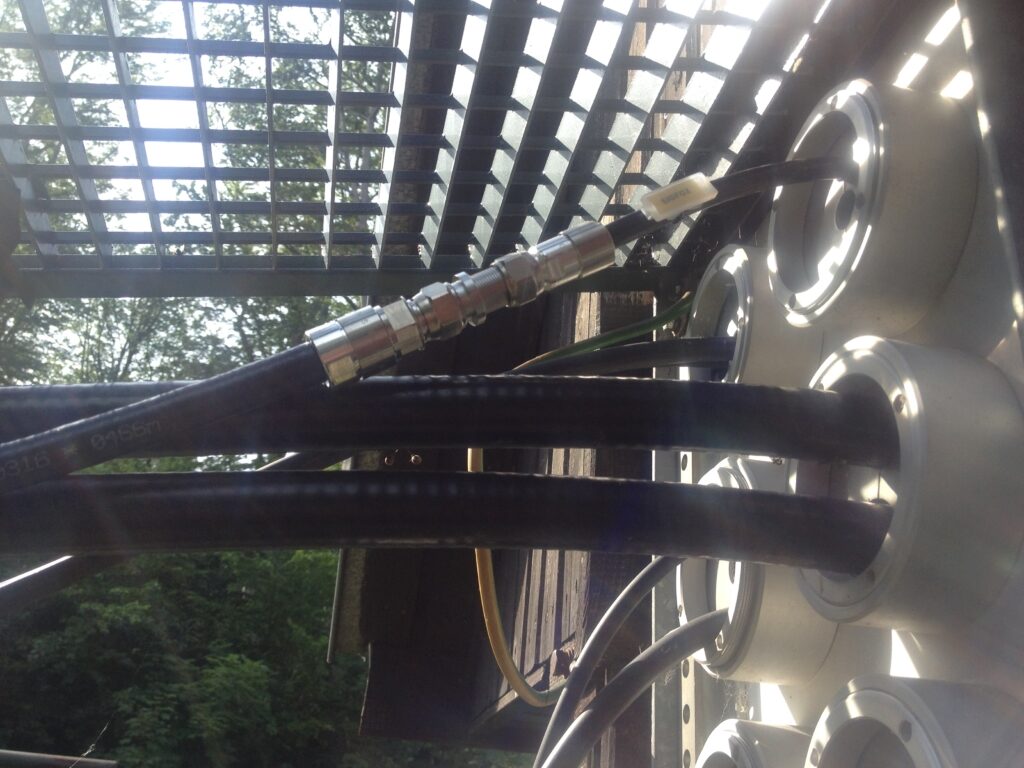 Grounding the coaxial cabling run from outdoors before it enters the server room
✨ 📝 3. A view of the Sigfox omnidirectional antenna installed at the top of the mast
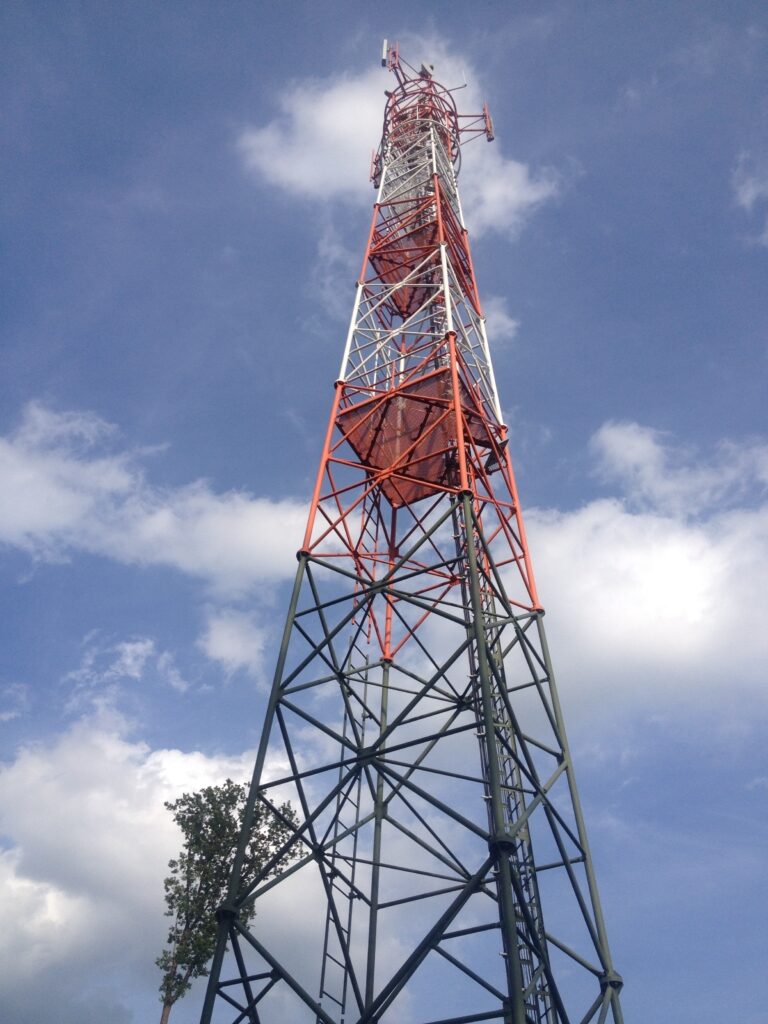 Overall view of the mast on which the Sigfox technology is being built. The omnidirectional antenna is at the upper right on the mounting arm
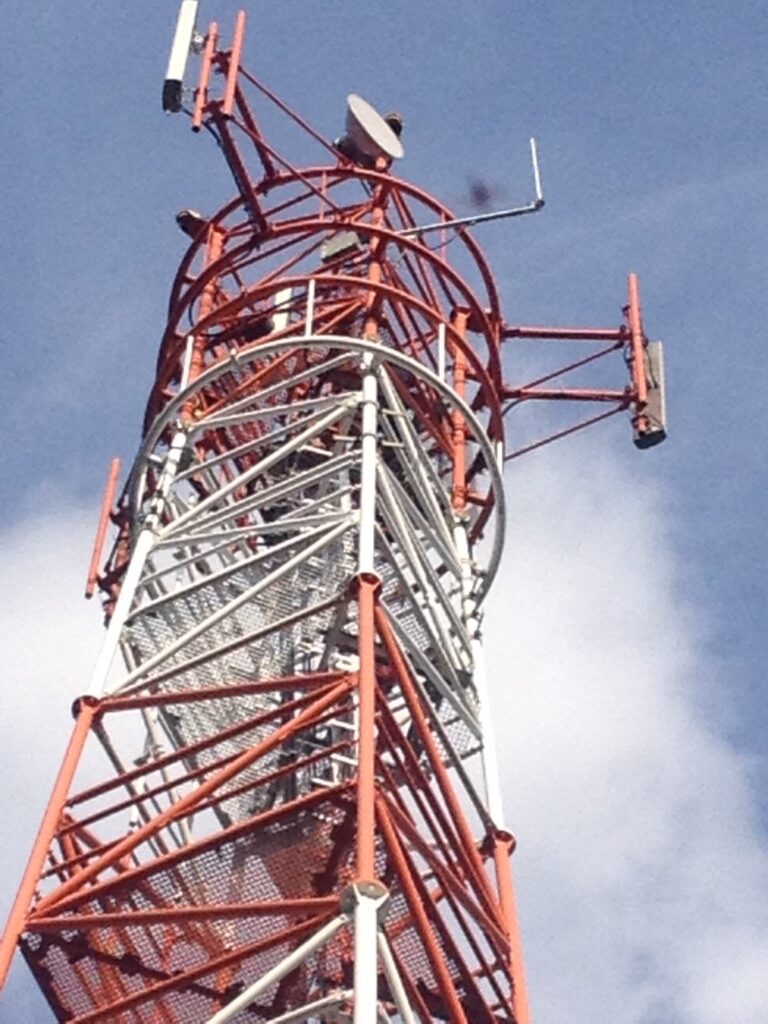 Detail of the Sigfox omnidirectional antenna (the white rod at the upper right)
✨ 📝 4. Functionality check
The cable-loss parameters are measured, and if everything is in order, Sigfox is switched on, increasing the density of signal coverage in the Czech Republic.
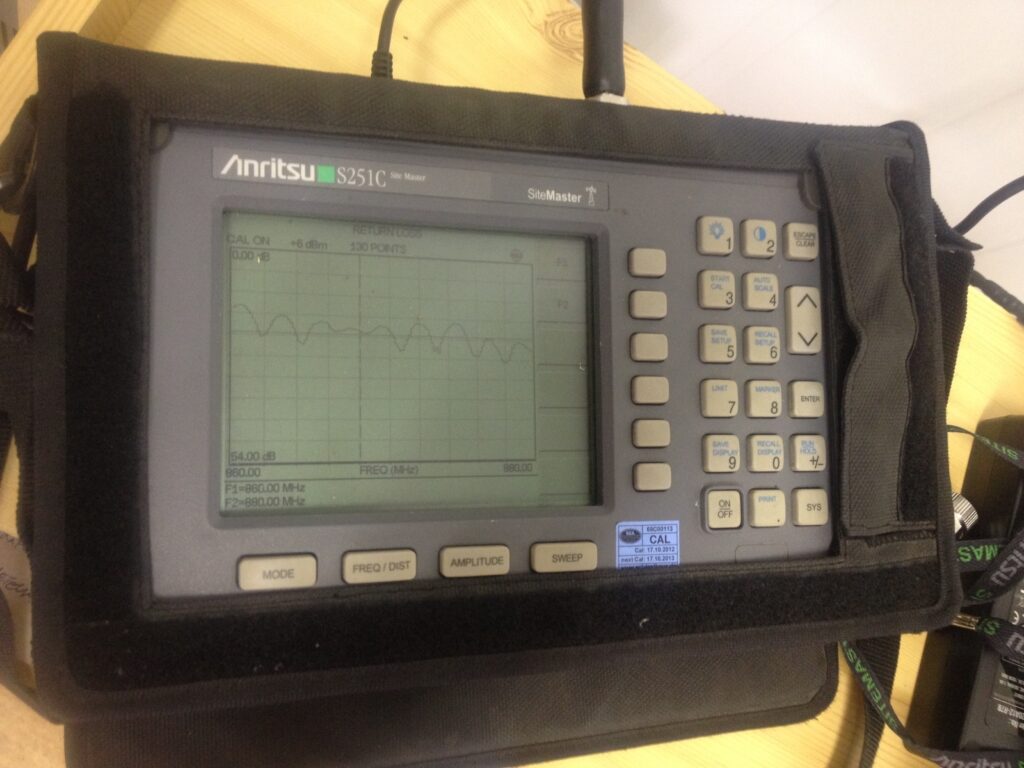 Measuring signal quality with a test instrument. The cable's dBi loss is measured.
Using the process described above, Sigfox sites were being built one after another. A single site takes roughly six hours to build. It really is an elegant and straightforward technology, and easy to install. Now it just needs some real applications!